[Retrospective] First Half of 2020 Remote Work Review
![[Retrospective] First Half of 2020 Remote Work Review](/_next/image?url=%2Fimages%2Fposts%2Fpost-21%2Fcover.jpg&w=3840&q=75)
Introduction
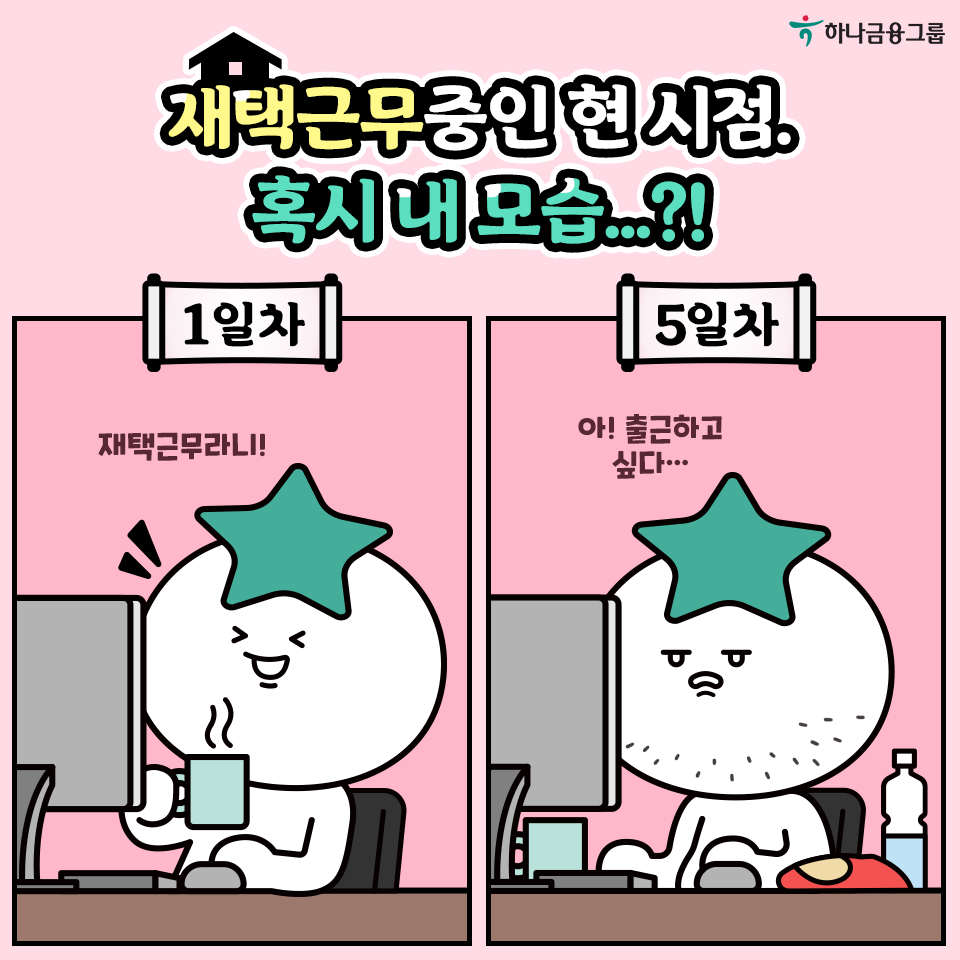
2020 has become an unprecedented era of remote work, with the COVID-19 pandemic situation continuing to repeat.
The company I work for has also been conducting remote work since February.
I want to share my experiences from working remotely during the first half of 2020.
I'll start this story by emphasizing once again that this is my subjective opinion about the remote work conducted at my company.
The Beginning of Remote Work
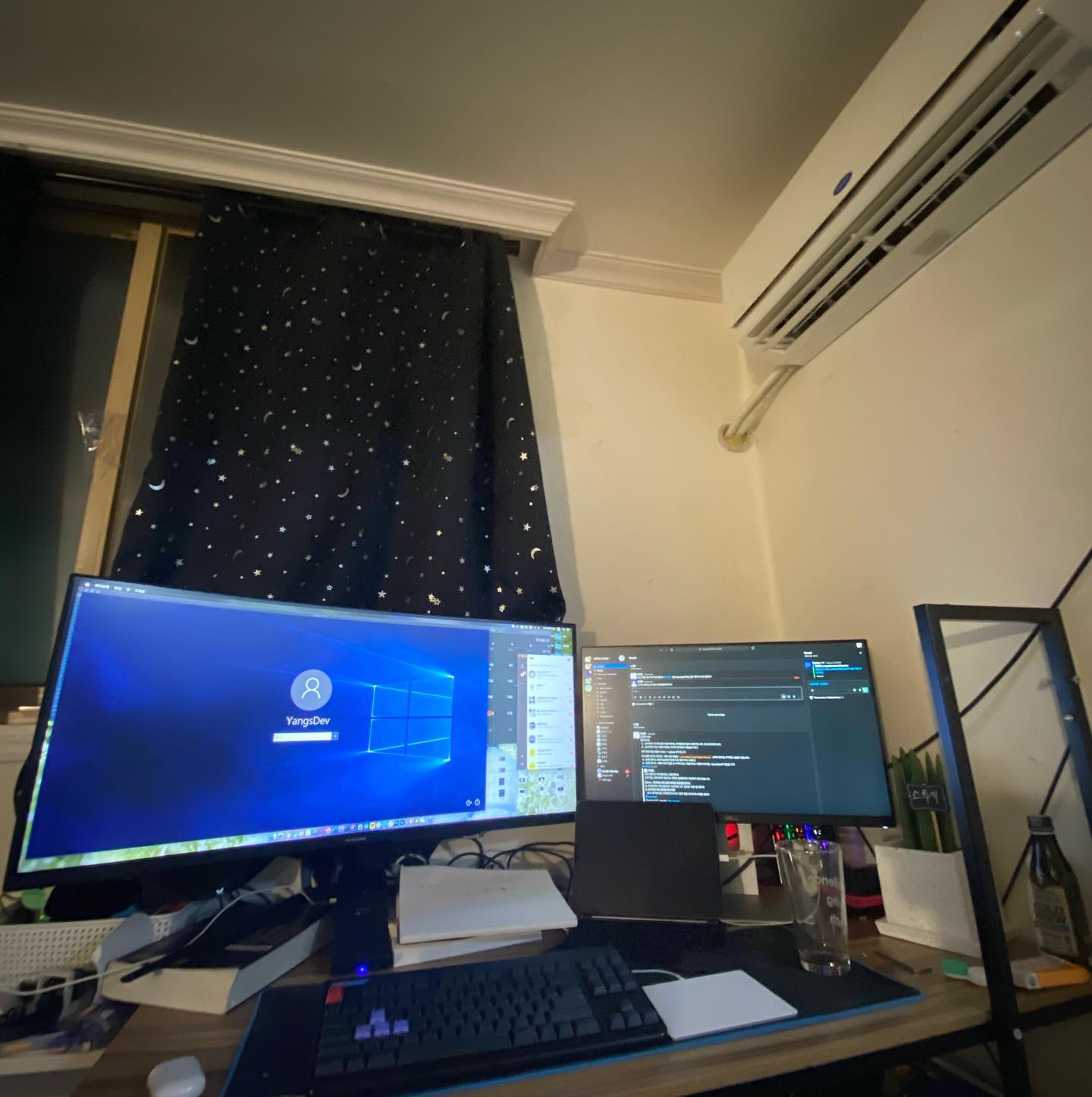
Remote work suddenly began when a COVID-19 confirmed case occurred at a restaurant right in front of the office.
After starting remote work without any preparation, others reportedly had quite a few issues preparing their environment.
In my case, as a server developer and a coding enthusiast(?), I was already working from home through the company VPN even before this.
So I didn't experience any inconvenience personally, but from what I heard, the issues were as follows:
- I don't have a monitor or keyboard at home.
Our team members reportedly went on to purchase laptops and new monitors for dual monitor setups after remote work began.
- The VPN keeps dying.
Initially, there was reportedly an issue where the license wasn't being applied due to a bug in the company VPN equipment.
Currently, we're using the VPN without any problems.
When remote work first started, we thought there wouldn't be any issues, but there were more problems than expected.
Problems Big and Small (1) - Communication Issues

I became a Hangouts parrot.
As soon as the transition period ended after starting remote work, we launched a major event.
During this time, we were communicating about various situations right before the launch.
However, in the early days, since all work communication was handled through messenger, there were many cases where people couldn't properly understand each other's work or had misunderstandings.
So we decided to actively use "Hangouts."
We have Hangouts meetings with team members multiple times a day, and even if there's the slightest problem, we align through Hangouts meetings rather than communicating via messenger.
As a result, natural communication became possible, and now we don't really feel any inconvenience regarding communication.
Problems Big and Small (2) - RDP is Too Slow

Magic Conch Shell, the screen is lagging, should I go home? (Oh wait, I'm already home...)
My company operates on Windows-based desktop environments and closed network services.
Therefore, from home, we connect to VPN and only the RDP port of our in-office PCs is open through VPN.
RDP performance is actually quite good. As someone who used VPN before the era of remote work began, it showed nearly similar performance to being in the office. (RDP dual monitor environment & mouse/keyboard that don't lag much)
However, as VPN users surged, it seems like bandwidth was limited (this is purely my personal speculation), and during certain times, there were quite a few issues with mouse/keyboard lag.
This issue still hasn't been resolved.
I heard that a certain company in Gyeonggi Province had fewer environmental issues when working remotely.
That company's case was because they used laptops at the office and could take their laptops home.
When VPN is connected, unlike my company where only the RDP policy for in-office desktop PCs is opened, they received the same policy as in the office.
As a result, they didn't experience any decrease in work productivity.
This is one of the things I hope changes at my company.
Problems Big and Small (3) - Two Networks, One Computer
I work in a network-separated development environment. The internet network with internet access and the development network without internet access are examples.
However, even in the pandemic situation of COVID-19 while working remotely, we cannot violate the network separation regulations.
Therefore, only one session can be connected at a time.
To send files from internet network to development network, I have to reconnect VPN by logging in again and getting approval... Then disconnect and connect to the development network...
I'm experiencing the worst productivity. In my case, fortunately, I have both a laptop and a desktop, so I connect the desktop to the development network and the laptop to the internet network, working in an environment identical to the office.
This problem was also solved by having multiple devices, but I think it was one of the things that significantly reduced productivity.
Problems Big and Small (4) - I'm a Mobile Developer, the Devices are at the Office, and I'm at Home
It's exactly as stated. There's an issue where testing needs to be done on mobile devices and access is only possible through company WiFi, so we can't access it.
In this case, we connect devices via ADB to the in-office test network PC and use a program that allows remote control through ADB, using touch via RDP.
This would also be possible to develop smoothly if the company VPN policy was the same as company WiFi rather than just connecting to desktops via RDP.. but this is another disappointing policy.
Problems Big and Small (5) - I'm at Home but I Want to Go Home

I think everyone who works at a company has thought "Ah.. I want to go home" at least once.
I'm also someone who says this a lot, and since I'm working remotely from home, I often think I want to go home even though I'm already home.
1. The boundary between work and life is collapsing.
I felt like the boundary between work and life was collapsing for quite a while.
I think this issue occurred because I was working while sitting on the sofa with my laptop or lying in bed.
As a result, I found myself working even after work hours.
After that, I set a rule for myself that work should only be done at my desk during work hours.
I'm trying to maintain work-life balance by logging out of messenger and VPN after work hours.
2. I become stricter with myself.
This is both an advantage and a disadvantage, but situations arise where I become stricter with myself.
If I were at the office, I would have taken a tea break in the morning, but somehow during remote work, I feel like I need to rush even when just going to get a cup of coffee from a coffee shop.
In terms of my work efficiency, I'm making more progress, but conversely, this seems to be causing quite a bit of stress.
In my team's case, we have frequent Hangouts tea times(?) and have decided to have chatting time in the morning to gradually relieve this.
There Are Good Things Too
1. You can sleep longer during commute time.
In my case, I'm one of the server developers who really needs a lot of sleep. I'm the type who uses half my vacation days to wake up late in the morning.
The approximately 3 hours spent commuting daily is saved, and I can use that time to sleep. It feels like the quality of my work is improving.
2. Working overtime is less tiring.
In my case, I'm the lead server developer on a B2C service team, but since we have few team members, I often work overtime.
Every time we do a major feature update, I go home late every day, but the stress from commuting home is quite significant.
However, with remote work, the burden of commuting disappears, so I think this fatigue also decreases.
3. Efficient use of time is possible.
Efficient use of time becomes possible.
For example, doing laundry during lunch break, cleaning in advance because guests are coming in the evening, or having home repairs done by using half-day (3 hours) leave - the idle time that disappears when "commuting" is removed makes it possible to use time more efficiently.
What We Should Follow for Efficient Remote Work
When working at a development company, I think the most important aspect is "communication."
To make a product, it's not enough for just developers, just planners, just designers, or just marketers to do well.
I think we can only make a good product when everyone understands each other's situations and collaborates.
Although I've done quite a lot of remote work during the short time of the first half of the year, I think the following should be followed for good communication between team members.
1. "Hello, I'm in" and sharing work hours
At my company, sharing "I'm in" in the team chat when starting work is one of the characteristics of remote work.
I rate this highly. We actually live in a world with a lot of TMI, but we don't know if someone has started work or not.
(They might be on leave, or couldn't come in because they're sick)
When at the office, you can determine whether someone has started work by whether they're at their desk or if their computer is on, but in a remote situation where you can start work as soon as you wake up, I think it's necessary to share attendance status so that we don't inconvenience each other (like wondering "Has this person started work?!").
Also, I think it's a good point to add an indicator distinguishing whether it's remote work or regular office work due to the work environment.
2. It's hard to understand when things aren't explained well. We need to be considerate of each other.
As I mentioned in the disadvantages of remote work, when communicating, people can become sensitive to "one period" or "one comma," or meanings can get distorted.
Something you asked just out of curiosity can be misunderstood as anger, and people end up getting upset with each other.
As I mentioned in the disadvantages section, if we talk through Hangouts while seeing faces or hearing voices, there's less misunderstanding, but inevitably we do a lot of work through messenger during remote work.
So we need to communicate in complete sentences.
"Did you connect that API? That one... the one called from MyPage. The requests seem a bit high" (X) "Has the client-server integration for /v1/user/me API been completed? The call count from a single client seems higher than I thought." (O)
This is an actual example from my team. I had communicated with the (X) version.. and it took a lot of time to organize the content with the client developer.
When at the office, we can talk while face-to-face or while looking at the product together or looking at logs together, but given the nature of messenger, if the speaker's background explanation is omitted, the receiver will have difficulty understanding.
That's why I think during remote work, rather than 'please understand even if I explain poorly', we need to become 'people who share too much information'.
3. Sharing work we're doing every day
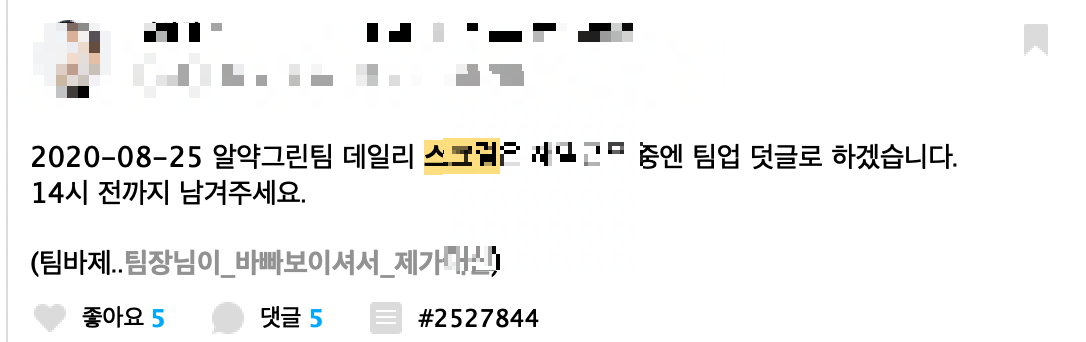
It's exactly as the title says. Sharing the progress of ongoing tasks.
When commuting to work, as mentioned in (2), there are many situations where we visually check each other's progress, but during remote work it's difficult, and if content isn't organized in detail like in (2) (like just being shared via messenger), confusion ensues.
Our team therefore conducts daily scrums through the company messenger board. When the team leader posts the daily scrum, individuals share their ongoing work briefly or with TMI.
This allows for quick overall work sharing, saving time and enabling immediate work understanding.
Conclusion
Reading this article, you might think I'm very negative about remote work, but that's not the case.
In my case, I consider time management very important and pathologically dislike wasting time.
Therefore, I'm someone who thinks it would be nice to continue remote work even after the COVID-19 pandemic situation passes.
However, remote work has its disadvantages that are just as significant as its advantages.
Looking at the case of a certain company in Gyeonggi Province, they created a good case where everyone can work remotely without problems by solving technical issues aside from communication issues.
I want to believe that these aspects will improve in the medium to long term at the company I currently work for. (If improvements don't continue... I might have to think about it)
By sharing troubleshooting cases from 6 months, a short but long time, of remote work, I hope that we can complement what needs to be complemented, and that a world where remote work becomes natural will come.
Also, I'd like to end this article by hoping that the global pandemic situation of COVID-19 will end soon and things will return to the way they were before.